RCS for Retail - Drive Foot Traffic and In-Store Conversions
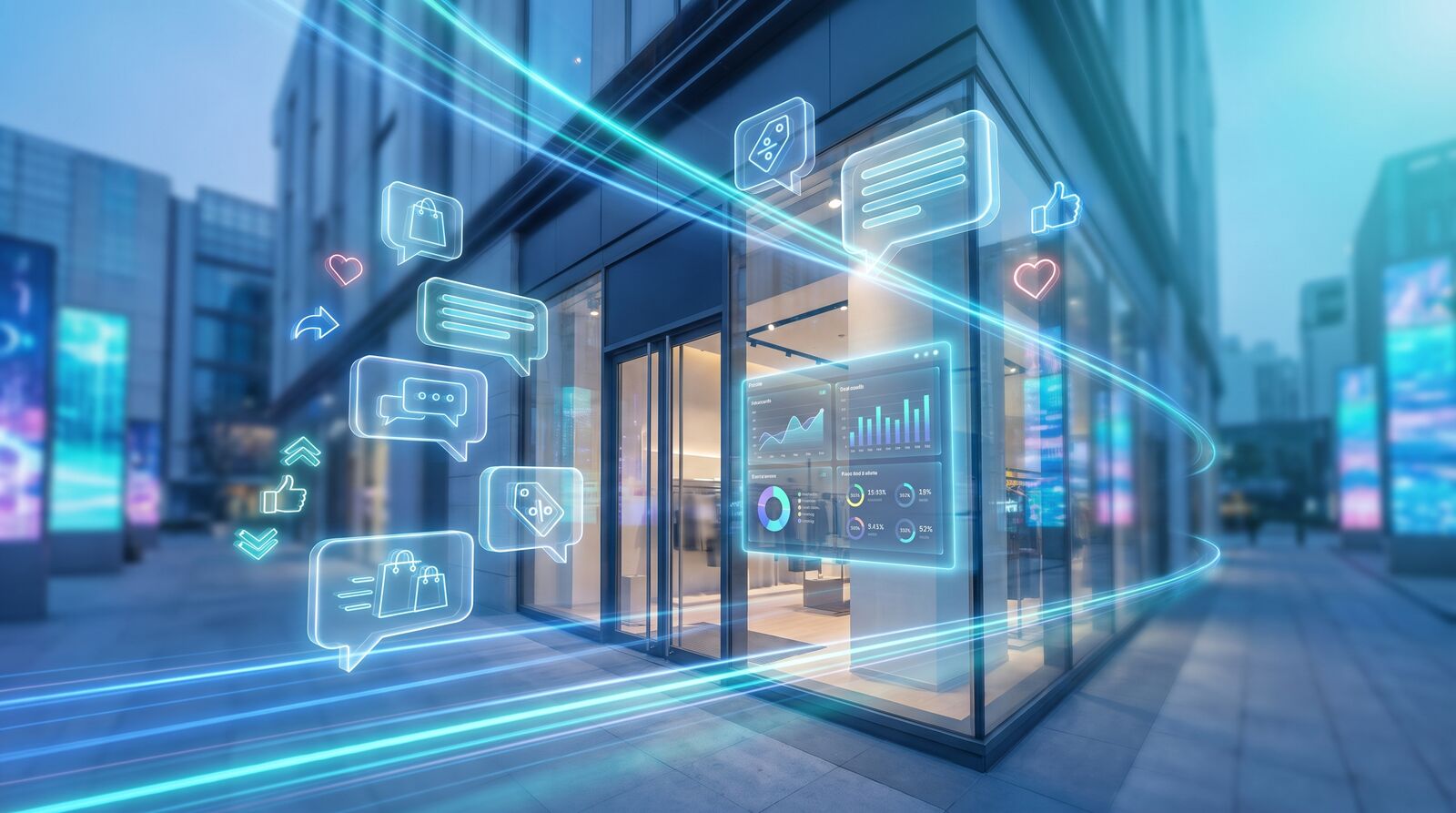
RCS for Retail: Drive Foot Traffic and In-Store Conversions
Retail is weird. You have customers who love your brand, you have inventory, you have physical locations... and yet they still shop online from your competitors instead of visiting your store.
That gap is where RCS wins for retail.
I've worked with retail brands that use RCS to drive 40-60% increases in foot traffic from their messaging campaigns. How? Because they're reaching people in the moment, showing them relevant inventory, and making it frictionless to visit the store.
The Inventory Availability Query
This is the one that blows people's minds. Customer texts or opens your app asking, "Do you have this in my size in the blue color?" With SMS, you're back to a phone call or a website visit. With RCS, you can show real-time inventory across nearby locations, right in the message.
Here's what that looks like:
A customer is browsing your website (or in your app) and sees a jacket they love. They click "Check availability." You send an RCS message showing:
- Your 5 nearest store locations
- Stock level of that jacket in that color/size at each location
- Distance from their current location
- Hours each store is open
- One-tap button to reserve in-store or navigate to that location
Conversion rate: 30-40% of people who ask about availability then visit the store.
Why this works: The friction drops to zero. They know the product is in stock, they know which store to go to, and they know it's worth the trip.
Localized Promotional Campaigns
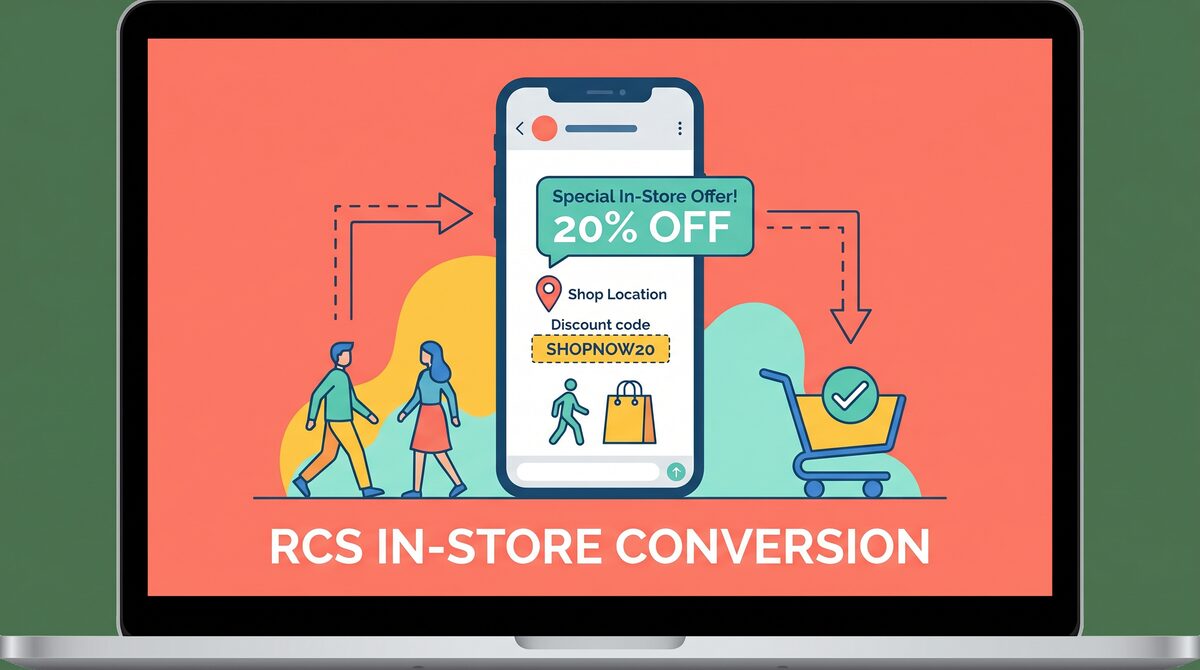
Generic promotional texts get ignored. Localized promotions based on store location? Those drive behavior.
Scenario: You have a promotion running in New York, but not across the country (maybe you're testing it in certain markets). Instead of texting all customers, you send RCS only to customers within 10 miles of participating stores:
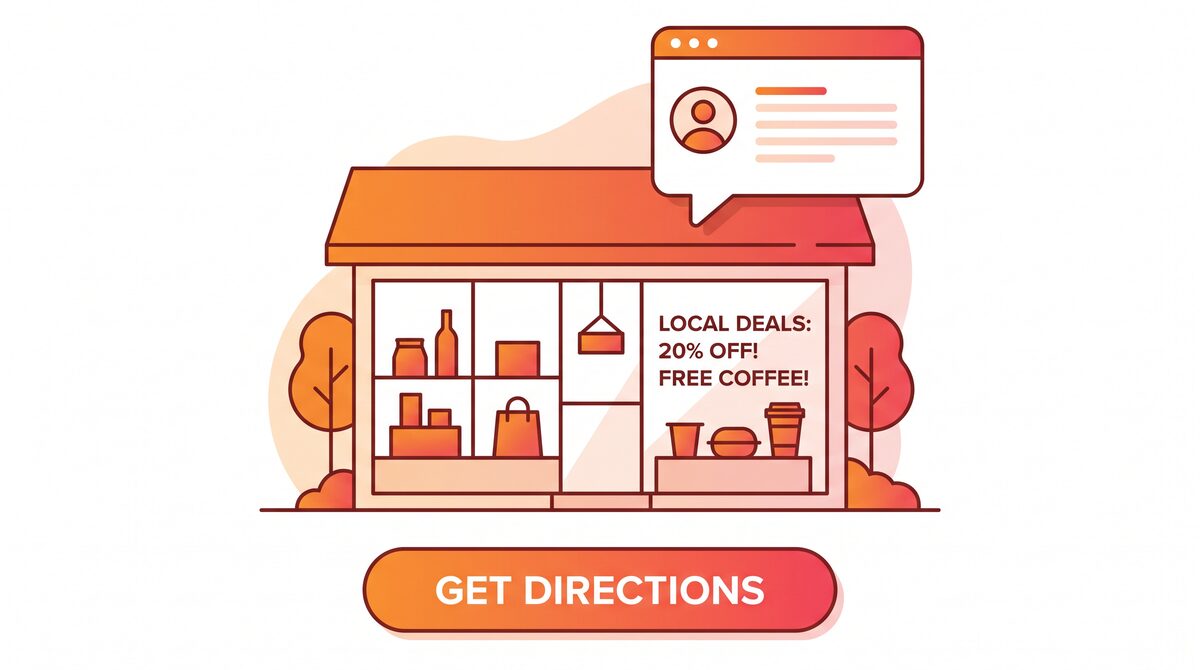
"40% off winter coats at our Soho location. This weekend only." Show images of the coats, the discount, and a map to the store.
Response and foot traffic: 2-3x higher than a generic national promotion.
Geographic targeting works for:
- New store openings ("We just opened near you")
- Local events ("Customer appreciation day this Saturday")
- Seasonal clearance ("Summer sale at your local store")
- Flash sales ("Limited time offer at participating locations")
The "Show Me" Movement
Here's a trend I'm seeing: customers increasingly want to see a product before buying it. They want to touch it, try it on, confirm the quality.
RCS helps bridge that gap. Instead of hoping they come to the store, you bring the store to them:
Product showcase: New collection comes in. Send an RCS carousel showing the new items, price, where they're in-store, availability. "Available now at 15 locations." One tap takes them to store locator.
Try-on guides: "How should this fit?" Send a size guide for that specific product, fitting tips, and a button to visit the store to try it on.
Staff expertise: "Chat with our style expert about which coat works for your body type." Real link to video or chat, but it drives store visits because people want to discuss in person.
Limited inventory alerts: "Only 2 left in stock at Downtown store. Reserved for you for 24 hours?" One-tap reserve button.
In-Store Experience Connectivity
This is where it gets sophisticated. RCS can enhance the in-store experience:
Mobile wait list: Long line at checkout? Customer can opt into an RCS message when the line is shorter.
In-store notifications: "You're here! Check our clearance section on 3rd floor (25% off select items)."
Receipt follow-up: "Thanks for your purchase! We've sent a care guide for your new jacket. Review it anytime. And here's 20% off your next visit."
Just-in-time support: Customer picks up a product in-store, can't find their size. They scan a QR code and get an RCS message with available sizes at nearby locations or ability to order online for in-store pickup.
Building the Loyalty Loop
Retail loyalty is about repeat visits. RCS helps build that habit:
Points balance updates: "You have 250 points. Spend them for $25 off your next purchase." Show what they can redeem and make it easy to check the balance.
Birthday month: "Happy birthday month! 30% off at your favorite stores." Make it personal, make it easy to use.
Purchase confirmation: "Great choice! Here's a care guide for your purchase." Shows that you value them beyond the transaction.
We miss you: "It's been 60 days. Come back and check out our new collection. Here's 20% off to welcome you back." Shows attention and removes friction.
The Data Advantage
Here's something people don't talk about enough: retail foot traffic data is powerful.
When you drive someone to a store via RCS, you capture:
- Which messages drive store visits
- Which times/locations drive traffic
- Which customer segments visit stores
- Cross-shopping patterns (people buying online vs. in-store)
This data helps you:
- Optimize promotional messaging
- Identify high-potential new locations
- Personalize future offers
- Understand your omnichannel customer
Common Retail Mistakes with RCS
Sending inventory updates to everyone: "We have product in stock" to your entire list. Irrelevant to most people. Segment by past purchases, browsing history, store proximity.
Forgetting about ship-from-store: If someone orders online but you can fulfill from a nearby store location, tell them. "Your order can be ready for pickup at your nearest store by tomorrow." Drive store traffic while fulfilling the order.
Not connecting online to offline: Customer buys online, receives confirmation. Why not follow up with an in-store experience? "Want to return this in-store? Here are your nearby options with hours."
Generic promotions: "Summer sale!" gets ignored. "Summer sale at Downtown location, Saturday only" gets traction.
Bad timing: Sending promotions during business hours works sometimes. But sending at 6-7 PM to drive weekend traffic might work better. Test timing for your audience.
The Numbers for Retail
Let's say you're a mid-size retail chain:
- 5 locations
- 20,000 customers in your loyalty program
- Current foot traffic: 2,000 visits per month from loyalty program (10% visit per month)
- Average purchase value: $85
- Current SMS promotion: 3% response = 60 visits, 45 purchases
With RCS-driven campaigns:
Location-based targeting: Show promotions only to customers within 5 miles of each location. Improves relevance.
Inventory availability: Show stock levels at nearby stores. Removes the "is it there?" question.
Targeted timing: Send promotions when people are likely to visit (Friday/Saturday evening).
Results:
- Response rate improves from 3% to 8-10%
- 20,000 customers × 8% response = 1,600 visits
- Average conversion to purchase: 65% = 1,040 sales per campaign
- 1,040 × $85 = $88,400 per campaign
That's one campaign. If you run 4 per month:
Monthly impact: $353,600 in sales from RCS messaging
Compared to SMS baseline of roughly $15,300/month, that's a 2,300% improvement.
Even with a conservative response rate (5%), you're looking at an extra $150,000+ per month from optimized RCS campaigns.
Getting Started with RCS for Retail
- Integrate location data. Connect your store locations to your messaging platform. You need real-time inventory and distance calculations.
- Start with inventory queries. This is your easiest win. Make it easy for customers to check what's in stock at nearby stores.
- Run a location-targeted test campaign. Pick one location or region. Send a promotional message only to customers within 5 miles. Measure foot traffic and sales impact.
- Build templates for common scenarios. Inventory check, new arrivals, local promotions, clearance, loyalty offers. Have them ready to deploy.
- Connect offline and online. Make sure your in-store POS system, your e-commerce platform, and your messaging platform talk to each other.
- Train store staff. Your team needs to understand that RCS customers are likely warm leads who've engaged with messaging.
The retail landscape is changing. Customers expect seamless omnichannel experiences. RCS is one of the best tools for bridging online and offline in ways that drive real foot traffic and sales.
Ready to drive more people to your stores?
Find out if you're ready for RCS
Take our free 5-minute readiness assessment and get personalized recommendations for your business.
Tim Mushen
Experienced RCS messaging specialists sharing insights and best practices.
Related Articles
Industry Guides
How E-Commerce Brands Use RCS to Recover Lost Sales
Recover carts and lift post-purchase with RCS—playbooks for e-commerce marketers ready to implement richer messaging.
Industry Guides
RCS in Healthcare: Appointment Management and Patient Engagement
Cut no-shows and improve patient messaging with RCS—guidance for healthcare operators and IT planning compliant outreach.