
The RCS Business Case - ROI That Actually Makes Sense

The RCS Business Case: ROI That Actually Makes Sense
Every time I talk to business leaders about RCS, the first question isn't "Is it possible?" or "Will our customers like it?" It's "What's the ROI?" And honestly, that's the right question to lead with.
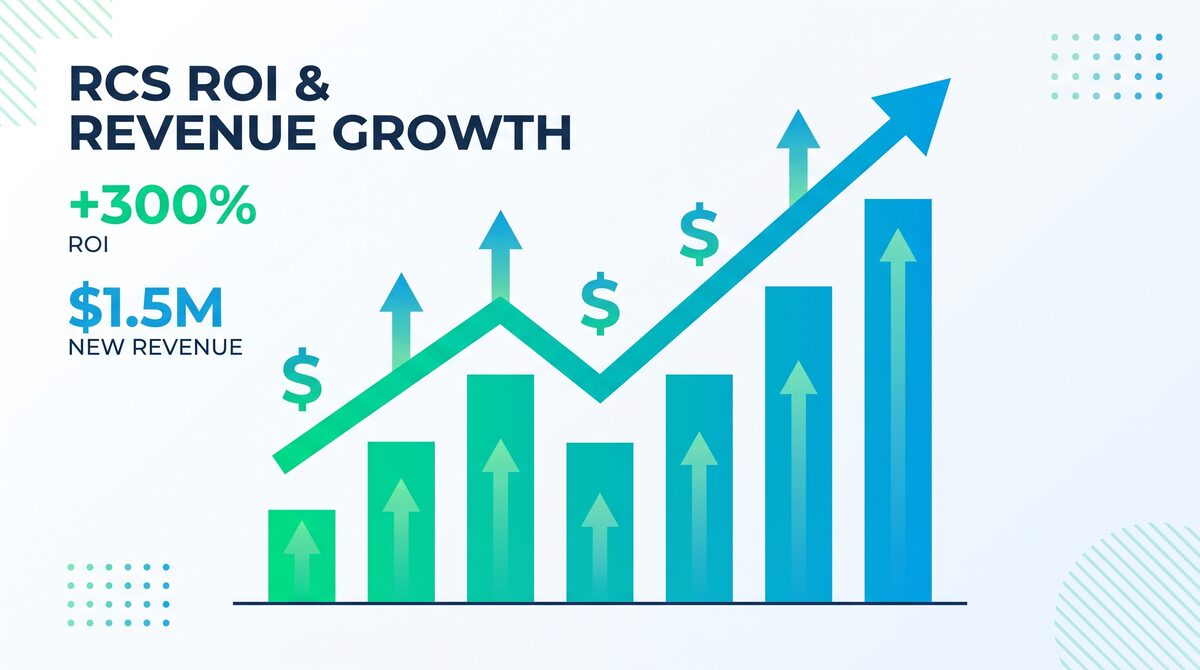
What the Data Actually Shows
I've spent years building RCS strategies for companies across every industry. The financial outcomes are consistent—if you do it right, the ROI is substantial.
Here are the engagement multipliers:
Open rates go from 20-40% (SMS) to 50-80% (RCS). That's not just a percentage point improvement; that's a completely different engagement dynamic.
Click-through rates jump from 2-5% to 8-15%. Think about what that means: instead of 1 in 20 people clicking a link, it's 1 in 10. That's a meaningful difference when you're sending to 100,000 people.
Response rates—actual interaction—climb from 1-3% to 5-10%. This is the one that really matters. These aren't passive views. These are people actively responding to your messages.
Conversion rates, the ultimate metric, improve from 0.5-2% to 2-8%. If you're running an e-commerce company and currently convert 500 people from a 100,000-person email blast, RCS could move that to 1,500-2,000 people. That's the difference between a decent campaign and a transformational campaign.
Real-World Numbers I've Actually Seen
E-Commerce: A client selling clothing had SMS product recommendations getting 2% click-through. Same audience, same product, sent via RCS with product images and carousels? 12% click-through. That's a 500% improvement. And importantly, when people can see the actual products inline, the average order value increases by 15-25%.
Hospitality: A hotel chain was sending booking confirmations via SMS with a 5% response rate for confirmation/questions. Switched to RCS with booking details, a map, and interactive buttons for date changes. Response rate jumped to 20%. They also saw a 30-40% improvement in upsell rates when room upgrades were featured directly in the message.
Retail: In-store traffic from promotional messages increased 40-60% when retailers switched to RCS with actual inventory levels and geolocation-triggered messaging.
Financial Services: Account alerts (large transactions detected, unusual activity, etc.) have a 50-70% action rate with RCS versus 10-20% with SMS. When you can show transaction details, location, and a button to report fraud directly in the message, people actually engage.
These aren't theoretical numbers from a vendor. These are results from real businesses I've worked with.
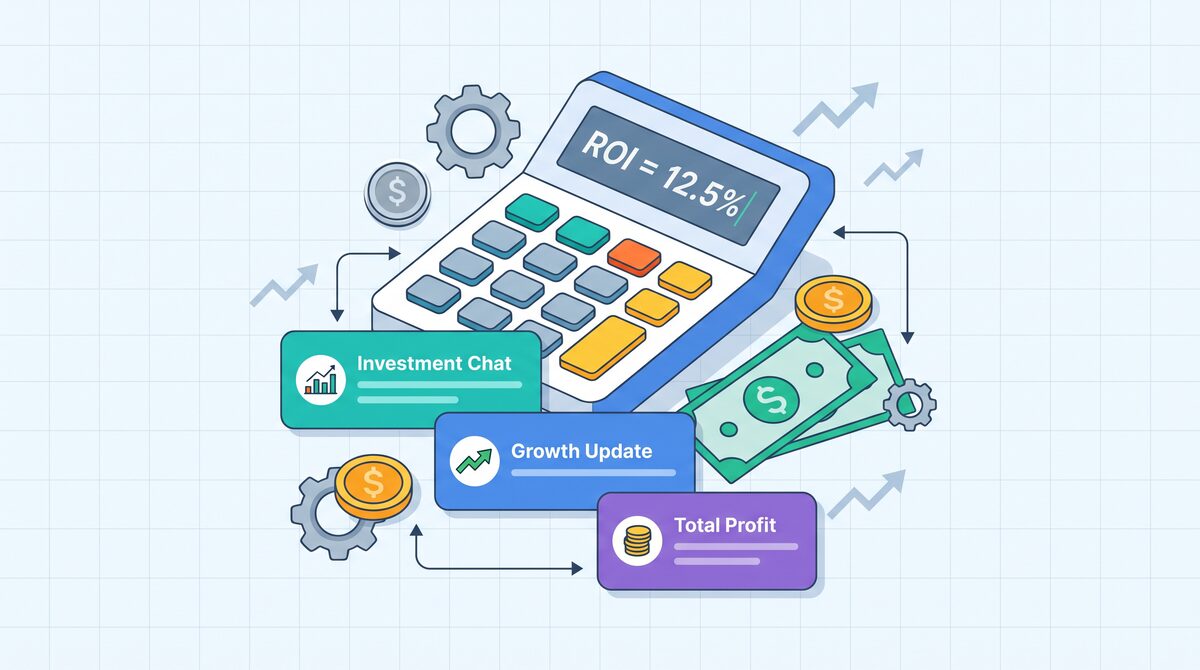
Building a Real Financial Model for Your Business
Let me walk through a practical example. Let's say you're an e-commerce company:
- 100,000 active customers
- Sending 50,000 promotional messages monthly
- Current SMS platform cost: $5,000/month
- Average order value: $50
- Current SMS conversion rate: 1.5%
Your current SMS baseline:
- 50,000 messages × 1.5% conversion = 750 orders
- 750 orders × $50 = $37,500 revenue
- Minus $5,000 platform cost = $32,500 net monthly
- Annual: $390,000
Now, you don't immediately move 100% of your traffic to RCS. That's not realistic. But let's say you move 20% of your messages to RCS (40% fallback to SMS for non-RCS devices).
Conservative RCS scenario (20% adoption):
- 10,000 RCS messages with 3% conversion (2x improvement) = 300 conversions = $15,000
- 40,000 SMS messages with 1.5% conversion = 600 conversions = $30,000
- Total: $45,000 revenue
- Platform cost increases maybe $200-300/month for RCS capability
- New net monthly: $44,500/month = $534,000 annual
- Additional revenue: $144,000/year
If your RCS implementation costs $40,000, you break even in about 3.3 months. Year two, you're up $144,000 with minimal additional cost.
Now let's say over 12 months you gradually increase to 40% of traffic on RCS as your audience naturally upgrades devices:
- 20,000 RCS at 3% = 600 conversions = $30,000
- 30,000 SMS at 1.5% = 450 conversions = $22,500
- Total: $52,500 monthly = $630,000 annual
- That's $240,000 more per year than your SMS baseline
Again, implementation was $40,000. That's a 6x return in year one. And it compounds every year because these are ongoing marginal improvements.
It's Not Just Revenue
The financial benefit isn't limited to conversion rate improvements. There are other sources of value:
Cost Reduction: RCS with proactive messaging (shipment tracking, support updates, appointment reminders) reduces customer service inquiries by 10-20%. That's fewer support tickets, fewer phone calls, lower support costs.
Operational Efficiency: Automated workflows powered by rich messaging reduce manual follow-ups significantly. If your team is spending 30 hours a week on manual customer communication, rich message automation could cut that by 15-25%.
Customer Retention: Better engagement typically correlates with better retention. A 5-10% improvement in retention adds serious long-term value.
Brand Perception: This one's hard to quantify, but it's real. Customers expect modern, interactive communication. SMS feels outdated to them. RCS feels modern and aligned with their other digital experiences.
The Money Conversation: Implementation Costs
Let's be honest about the investment:
- Platform setup and integration with your existing systems: $5,000-15,000
- Team training and documentation: $2,000-5,000
- Content creation (templates, images, copy for your first campaigns): $3,000-10,000
- First-year consulting and optimization: $10,000-30,000
- Total Year 1 investment: $20,000-60,000
Most companies spend closer to $40,000 total when all is said and done.
Year 2 and beyond? Mostly just platform and messaging costs. No major new investment needed. The payback period for most organizations is 3-6 months. Six to twelve months is more conservative, but still well within a single fiscal year.
Industry-Specific Economics
The ROI varies by industry, but it's strong across the board:
E-Commerce:
- Investment: $30,000-50,000
- Annual benefit (conservatively): $75,000-250,000
- ROI: 150-500%
Hospitality & Travel:
- Investment: $25,000-40,000
- Annual benefit: $60,000-150,000
- ROI: 150-400%
Financial Services & Banking:
- Investment: $40,000-60,000
- Annual benefit: $100,000-300,000
- ROI: 167-500%
Retail:
- Investment: $25,000-45,000
- Annual benefit: $80,000-200,000
- ROI: 180-500%
The range is wide because it depends on your current engagement rates, message volume, and average order value. A high-volume, high-value business sees more absolute benefit.
Building Your Specific Business Case
Here's the framework I actually use when helping companies build this case:
Step 1: Baseline Document your current messaging program. How many messages are you sending monthly? What's the open rate, click rate, and conversion rate? What's your platform cost? What's the revenue generated?
Step 2: Conservative Projection Apply a conservative engagement lift. I usually recommend 50-75% improvement (not 100-200% even though that's possible). This keeps your forecast grounded and realistic for leadership.
Step 3: Calculate Incremental Value Don't replace SMS; augment it. Only move traffic to RCS that makes sense (promotional, engagement-driven messages). This is typically 20-40% of your total volume.
Step 4: Factor Implementation Be honest about costs. Build in integration time, team training, and content creation. Don't assume you can do it yourself for free if you don't have the bandwidth.
Step 5: Calculate Payback Divide implementation cost by monthly incremental benefit. Most legitimate implementations show payback within 6-12 months.
Step 6: Show Year 2 Upside This is key for getting leadership buy-in. "It costs $40,000 and we break even in 4 months. But in year 2, we get $150,000+ of incremental benefit with almost no additional investment." That's a compelling story.
The Risk Conversation
Every CFO wants to know: what could go wrong?
Technical Risks: Low. RCS has fallback to SMS. If something breaks, customers still get a text message.
Market Risk: RCS adoption might be slower than projected in your specific demographic. But you're testing with a pilot program first (usually 5-10% of your audience), so you'll know real quick if it works.
Implementation Risk: Significant cost overruns are possible if you pick the wrong partner or don't plan properly. Mitigate this with a clear statement of work and experienced partner.
Financial Risk: Minimal because payback happens quickly. Even if results are only 50% of projections, you typically still break even within 12 months.
The risks are manageable if you approach this with clear eyes and don't oversell the upside internally.
The Decision Framework
Implement RCS if:
- At least 50-60% of your customer base uses RCS-capable devices (most markets hit this threshold already)
- You're sending promotional or engagement-focused messages (not just critical transactional alerts)
- Conversion improvement is a business priority
- You have or can budget $30,000-60,000 for first-year implementation
- You can dedicate 1-2 people to the project
Hold off if:
- Your SMS engagement is already exceptional (some businesses just crush it with SMS and optimization might make more sense)
- You're primarily sending critical alerts where SMS reliability is paramount
- Budget is completely constrained and can't be negotiated
- Your customer base is primarily on older devices or in markets where RCS adoption is still emerging
The Bottom Line
The financial case for RCS is strong. I've built it out in spreadsheets for dozens of companies, and the story is consistent:
- 3-6 month payback period
- 100-400% annual ROI
- 2-4x improvement in engagement metrics
- Sustained incremental revenue that compounds over time
Combined with improving RCS device adoption (which gives you more audience to reach over time), the first-mover advantage is real. Businesses that implemented RCS 2-3 years ago are now seeing compounding benefits as device support has grown.
If you'd like to build out your specific business case—with your actual numbers plugged in—that's something I help companies do regularly. You'd be surprised how quickly the math works out in your favor.
Ready to explore what RCS could mean for your business? Schedule a consultation or browse our resources.
Find out if you're ready for RCS
Take our free 5-minute readiness assessment and get personalized recommendations for your business.
Tim Mushen
Experienced RCS messaging specialists sharing insights and best practices.
Related Articles

Strategy
RCS Adoption Challenges - And How to Overcome Them
Overcome carrier delays, fragmentation, and cost objections—practical fixes for marketers and operators planning an RCS rollout.

Strategy
RCS Best Practices - What Actually Works
Proven RCS frequency, timing, and content practices for marketers—what works, what to avoid, and how to scale when you're ready.