RCS Best Practices - What Actually Works
RCS Best Practices: What Actually Works
There's a lot of bad advice out there about RCS messaging. People take best practices from SMS or email and apply them to RCS without understanding how RCS is fundamentally different.
Here's what actually works based on real-world results.
Messaging Frequency: The Golden Zone
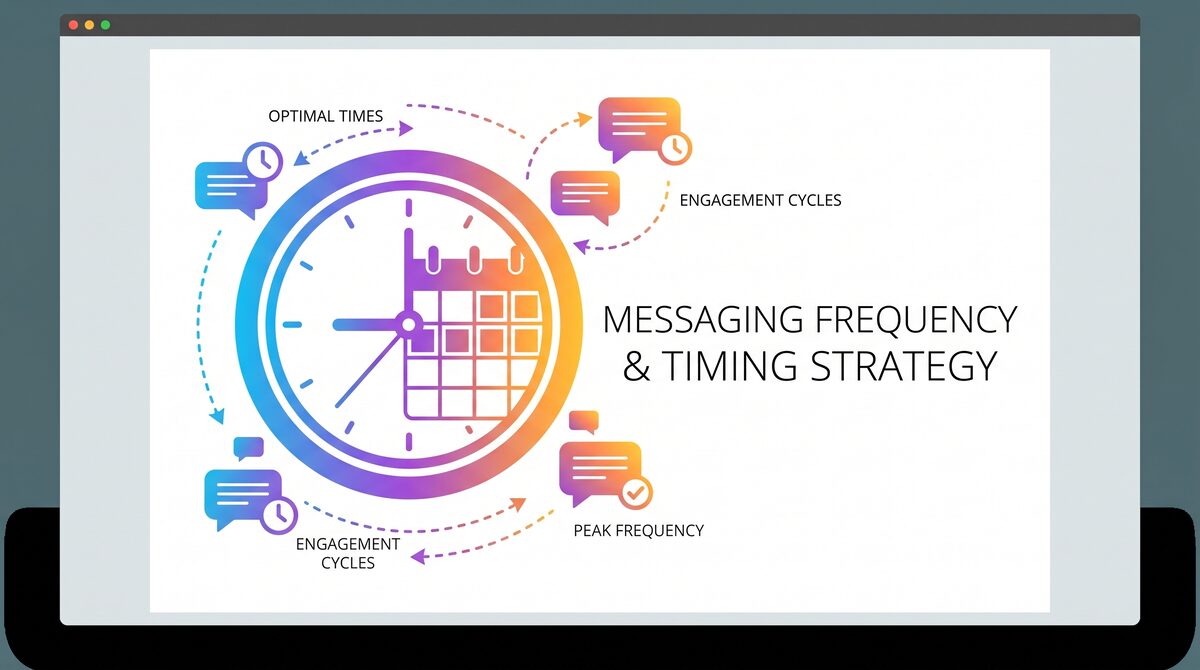
Too often: Customers opt out and complain. Too seldom: You're not capturing the opportunity.
What we see working:
For transactional/service messages (order confirmations, appointment reminders, delivery updates): 1-3 per week is fine. Customers expect these and don't consider them spam.
For promotional messages: 1-2 per week maximum. More than this and opt-out rates spike.
For lifecycle messages (welcome, abandoned cart recovery, win-back): 1 per week. These are high-value but easy to overdo.
The data:
- 1 message/week: 50%+ engagement
- 2 messages/week: 48%+ engagement (no meaningful drop-off)
- 3 messages/week: 45%+ engagement
- 4 messages/week: 38%+ engagement (noticeable drop)
- 5+ messages/week: 25-30% engagement (customers are tuning out)
The knee of the curve is around 2-3 promotional messages per week. You can push to 3, but 4 is usually where you lose momentum.
But here's the thing: Your specific audience determines this. A high-engagement customer segment might tolerate 4 messages. A low-engagement segment might prefer 1. Segment by engagement level and adjust frequency accordingly.
Send Timing: It's More Important Than You Think
Bad timing kills engagement. Send at 3 AM and 90% of people ignore it. Send at the right time and you get 2-3x better engagement.
What works:
By device:
- Android users (your RCS audience): Most active 9-11 AM and 7-9 PM
- Peak engagement: Tuesday-Thursday
- Avoid: Late evening (after 10 PM) and very early morning (before 7 AM)
By industry:
- E-commerce: 9-11 AM and 6-8 PM (people checking mail/browsing)
- Retail: 5-7 PM (dinner time) and 9 AM (morning coffee)
- Healthcare: 8-10 AM and 3-4 PM (business hours when patients plan appointments)
- Financial services: 9-11 AM (checking accounts)
By use case:
- Promotional: Evening (7-9 PM) when people have free time
- Transactional: Immediately (don't wait; deliver confirmations instantly)
- Service reminders: Morning of (not night before)
- Urgent alerts: Immediate regardless of time
Test to find your optimal time. Your customers might have different patterns. Send the same message at different times, measure engagement, and optimize.
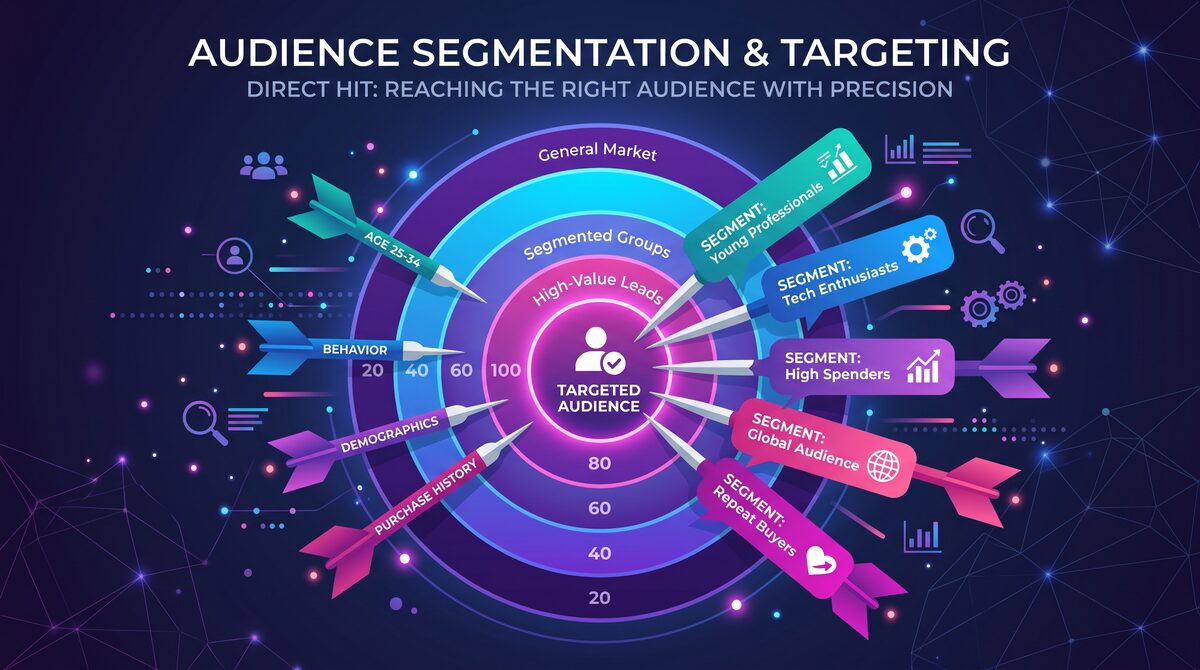
Segmentation: The Most Overlooked Strategy
This is where most teams leave money on the table. They send the same message to everyone.
Segment by:
Purchase history: Customers who've bought similar products get offers relevant to them. Customers who haven't bought anything get "new customer" offers.
Engagement level: High-engagement customers can tolerate more frequent messages. Low-engagement customers need high-value offers.
Customer value: Your best customers (top 20% by spend) deserve premium offers and personalized messages. Don't treat them the same as bottom-tier customers.
Device/platform: RCS users vs. SMS users don't get the same rich experience. Plan accordingly.
Geographic location: Local offers for nearby customers. Different messaging for different regions.
Life cycle stage: New customers (onboarding), regular customers (retention), lapsed customers (win-back), VIP customers (premium treatment).
The impact:
- Generic messaging to everyone: 8-10% conversion
- Segmented messaging: 15-25% conversion
That's a 2-3x improvement just from thoughtful segmentation.
Content Strategy: Less is More
RCS makes it easy to cram information into a message. Resist this temptation.
Good RCS message:
- One clear offer or action
- 2-3 compelling images/cards
- 1-2 buttons maximum
- Clear call-to-action
Bad RCS message:
- 5 different products
- A wall of text
- 8 buttons
- Unclear primary action
RCS is still mobile. People are scrolling fast. You have seconds to grab attention.
Here's the structure that works:
- Hook (2 seconds): Why should I care? "Save 40% today" or "Your order shipped" or "Check out what's new"
- Context (5 seconds): What am I looking at? Product image, price, offer details
- Action (3 seconds): What should I do? One clear button or link
Total time: 10 seconds max. If someone hasn't decided by then, you've lost them.
Copy: Tone Matters More Than You Think
RCS copy should be:
Conversational: "Hey! Your order is on the way →" instead of "Order Status Notification: Your Order #12345 Has Been Shipped"
Action-oriented: "See your tracking" instead of "Click to view details"
Personal: "Your customized recommendations" instead of "Recommended products"
Clear benefit: "Get 40% off items you love" instead of "Holiday promotion"
The difference between "Click here to see our sale" and "Save 40% on winter coats" is engagement. The second one has a clear benefit. The first is generic.
Rich Media Strategy
RCS supports images, carousels, and forms. Here's what actually works:
Images: Product photos work. Lifestyle photos get ignored. Use product photos with minimal text overlay.
Carousels: 3-5 items maximum. People rarely scroll past 3. Show variety, not quantity.
Forms: Use sparingly. People don't like filling out forms in messages. Use for short inputs (2-3 fields max). For longer forms, link to a web form.
Video: Underrated. Short (10-15 second) videos of products or instructions work well.
Suggested replies: These are your secret weapon. Instead of asking people to type responses, give them button options. Response rates jump from 2-3% to 10-15%.
The Fallback Fallacy
One mistake I see: teams optimize for RCS so hard they forget about SMS fallback.
Remember: 20-30% of your audience still gets SMS instead of RCS (iPhone users, older Android devices, etc.).
Your RCS message: "Check out our winter collection with gorgeous images and product carousels showing 12 items."
Your SMS fallback: "..."
(They get nothing or they get mangled text from the RCS message.)
Always have a separate SMS fallback that makes sense for text-only devices.
RCS: [Carousel with 5 winter coats, prices, buy buttons]
SMS: "Winter collection is 40% off. Shop now: link"
Both deliver value. One is rich, one is lean, but both work.
Opt-In and Opt-Out: Respect It
RCS is a privileged communication channel. Customers are opting in to get rich, interactive messages. Respect that.
Clear opt-in: "Get RCS messages with rich product images and one-tap shopping. Opt in?" Make it crystal clear what they're getting.
Easy opt-out: Include a "Stop messages" option in every campaign. Make it one tap, not a link to a web form.
Respect opt-outs: When someone opts out, remove them immediately. Don't keep sending and hope they don't notice.
Teams that respect opt-out boundaries actually see better engagement over time because their list is engaged subscribers, not people forced to receive messages.
A/B Testing: Do It Constantly
Test everything:
- Send times
- Message copy
- Images
- Button text
- Audience segments
For each test:
- Segment into test and control groups (at least 1,000 people each)
- Change one variable only
- Measure statistically significant differences
- Document what won and why
- Apply winner to future campaigns
One caution: Don't test for the sake of testing. Test when you have a genuine hypothesis ("Evening messages perform better than morning" or "Images increase CTR").
Compliance: Don't Be Reckless
RCS is text messaging. TCPA laws apply in the US. Other countries have their own regulations.
Minimum requirements:
- Explicit opt-in: Get written consent to send RCS
- Clear sender ID: People know who's messaging them
- Easy opt-out: One-tap to stop
- No spoofing: Don't pretend to be someone else
- Reasonable hours: Don't message at 2 AM
- Relevant content: Don't send completely unrelated messages
Break these rules and you'll face fines, complaints, and brand damage.
When RCS Doesn't Make Sense
I'm an RCS evangelist, but I'm realistic. RCS isn't right for everything:
Don't use RCS for:
- Critical security alerts (use SMS for guaranteed delivery)
- Time-sensitive information where you need 100% reach (SMS is more reliable)
- Messages to audiences where RCS adoption is very low (<30%)
- One-off communications to old lists
Use SMS instead for these cases. It's proven, it's reliable, it reaches everyone.
The Metrics That Reveal Bad Strategy
If you see these patterns, something's wrong with your strategy:
Engagement dropping over time: You're probably over-messaging or messaging wrong people. Add segmentation and reduce frequency.
High open rates, low conversion: Your message is interesting but your offer isn't compelling. Test better offers or better targeting.
Unsubscribe spike: You're either over-messaging, sending irrelevant content, or violated privacy expectations. Back off and re-segment.
Poor results on repeat sends: Message got old. Refresh copy and visuals for next send.
Putting It Together: The Winning Formula
Great RCS strategy combines:
- Right frequency: 2-3 promotional messages per week
- Right time: Test to find your audience's peak hours
- Right people: Segment by value, history, and engagement
- Right content: One clear offer, compelling image, easy action
- Right respect: Easy opt-out, compliance, reasonable boundaries
- Right measurement: Test constantly, learn from results
Do these six things and you'll see 2-3x better engagement than baseline SMS.
Ignore them and you'll wonder why RCS "didn't work for us."
Ready to implement these best practices? Browse our resources or schedule a consultation.
Find out if you're ready for RCS
Take our free 5-minute readiness assessment and get personalized recommendations for your business.
Tim Mushen
Experienced RCS messaging specialists sharing insights and best practices.
Related Articles

Strategy
RCS Adoption Challenges - And How to Overcome Them
Overcome carrier delays, fragmentation, and cost objections—practical fixes for marketers and operators planning an RCS rollout.

Strategy
The RCS Business Case - ROI That Actually Makes Sense
Build an RCS business case execs approve—costs, ROI ranges, and payback framing for marketers and operators seeking buy-in.