Your RCS Implementation Roadmap - How to Launch Without the Headaches

Your RCS Implementation Roadmap: How to Launch Without the Headaches
I've managed dozens of RCS implementations, and I've learned what separates the smooth ones from the ones that drag out, cost more than expected, and deliver underwhelming results. The difference usually comes down to planning and expectations.
This roadmap is based on what I've actually seen work. It's not theoretical. It's built from real projects with real companies.
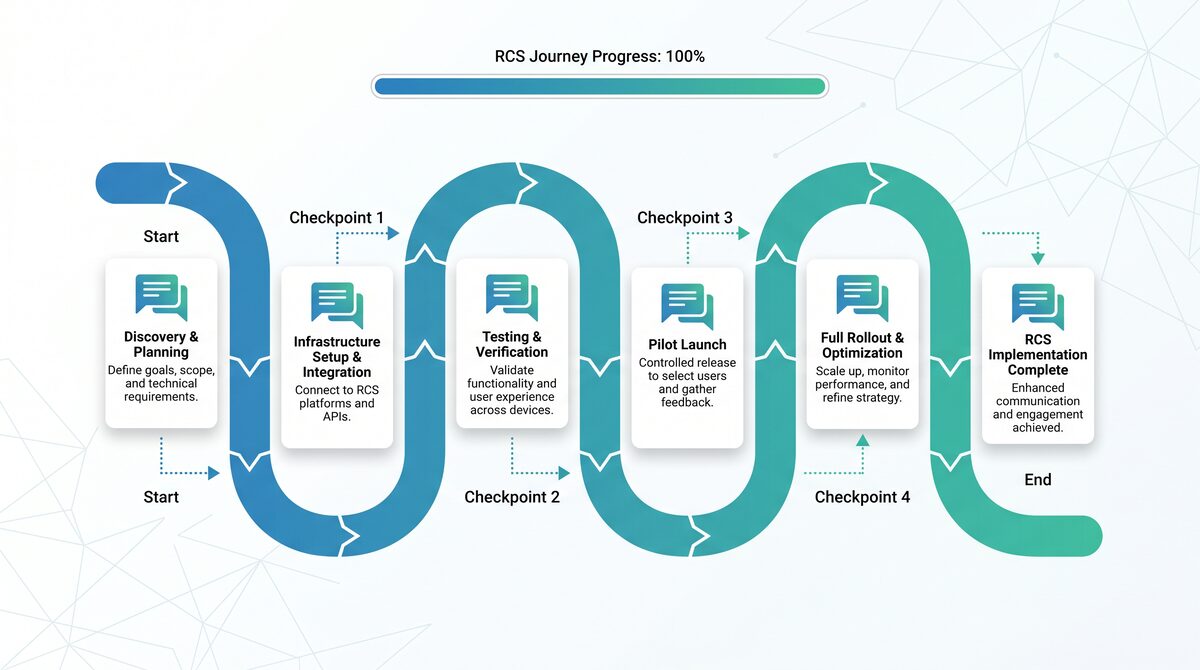
Phase 1: Discovery & Assessment (Weeks 1-2)
Evaluate Your Current State
- Document existing messaging channels
- Identify communication pain points
- Review customer preferences and behaviors
- Assess current technology infrastructure
Define Your Goals
Clear goals drive successful implementation. Consider:
Business Objectives:
- Increase customer engagement
- Improve conversion rates
- Reduce support costs
- Enhance brand perception
- Generate new revenue streams
Specific, Measurable Goals:
- Increase engagement by 40%
- Reduce response time by 50%
- Improve customer satisfaction to 85%+
- Achieve 25% higher conversion on campaigns
Assess Your Audience
- What percentage uses RCS-capable devices?
- Which segments benefit most from rich messaging?
- What devices does your customer base use?
- What content resonates with your audience?
Stakeholder Alignment
Secure buy-in from key stakeholders:
- Executive leadership (budget, strategy)
- Marketing teams (campaigns, content)
- Sales teams (customer outreach)
- IT teams (integration, security)
- Customer service (implementation, training)
Phase 2: Strategy Development (Weeks 3-4)
Develop Your RCS Strategy
Channel Strategy:
- Which messages move to RCS? (promotional, transactional, service)
- What stays with SMS? (critical alerts, universal reach)
- How to handle fallbacks for non-RCS users?
- Integration with other channels (email, social, web)
Content Strategy:
- Message tone and voice
- Visual branding in messages
- Interactive element approach
- Personalization strategy
- Message frequency and timing
Audience Segmentation: Create segments for targeted messaging:
- High-value customers for premium experiences
- New customers for onboarding sequences
- At-risk customers for retention campaigns
- Engaged customers for upsell/cross-sell
Create Your Use Case Prioritization
Priority 1 (High Impact, Easy):
- Promotional announcements
- Appointment reminders
- Order status updates
- Survey/feedback requests
Priority 2 (High Impact, Medium Effort):
- Integration with CRM
- Customer service automation
- Loyalty program integration
- Personalized recommendations
Priority 3 (Long-term):
- Rich commerce experiences
- Complex workflow automation
- Advanced personalization
- AI-powered optimization
Build Your Timeline
A typical implementation takes 2-3 months:
Month 1:
- Carrier registration and setup
- Brand verification
- Team training
- Content creation for first campaigns
Month 2:
- API integration
- Testing and QA
- Pilot program with select customers
- Performance monitoring
Month 3:
- Full rollout
- Optimization based on results
- Scaling to additional use cases
- Advanced automation setup
Phase 3: Technical Preparation (Weeks 5-8)
Select Your RCS Platform
Key Evaluation Criteria:
- Carrier coverage and reliability
- API capabilities and documentation
- Analytics and reporting
- Team support and documentation
- Scalability and pricing
- Integration options
Infrastructure Setup
Carrier Registration:
- Apply with major carriers (Verizon, AT&T, T-Mobile, etc.)
- Brand verification process
- Authentication setup
- Approval timeline: 2-4 weeks
API Integration Planning:
- Map your technical architecture
- Identify system integration points
- Plan for security and compliance
- Design fallback and error handling
Build Your Content Library
Message Templates: Create reusable templates for:
- Order confirmations
- Shipping updates
- Appointment reminders
- Customer service responses
- Promotional announcements
Rich Media Assets:
- Product images (high resolution, optimized)
- Promotional graphics
- Tutorial videos
- Brand assets and logo
Interactive Elements:
- Define button text and actions
- Plan carousel content
- Design form elements
- Create fallback text
Phase 4: Testing & Validation (Weeks 9-10)
Internal Testing
Functionality Testing:
- Send messages across platforms
- Test on different devices
- Verify all interactive elements
- Check rich media rendering
- Test fallback SMS delivery
Compliance Testing:
- Review message content for compliance
- Verify opt-in/opt-out functionality
- Check data privacy measures
- Audit security protocols
- Test audit trail functionality
Performance Testing:
- Load testing with expected volume
- Latency and delivery time testing
- Error handling and recovery
- Reliability under peak load
Pilot Program
Select 5-10% of Your Audience:
- High-engagement customers
- Diverse device types
- Geographic distribution
- Different customer segments
Measure Pilot Metrics:
- Delivery rate
- Open/interaction rate
- Customer feedback
- Technical issues
- Device compatibility
Gather Feedback:
- Customer satisfaction surveys
- User experience feedback
- Technical issue reports
- Performance observations
Phase 5: Launch & Optimization (Weeks 11-12)
Full Rollout
Staged Rollout Approach:
- Week 1: 25% of customer base
- Week 2: 50% of customer base
- Week 3: 75% of customer base
- Week 4: 100% of customer base
Monitoring & Support:
- 24/7 monitoring of delivery and engagement
- Quick escalation process for issues
- Team on standby for support
- Customer communication plan ready
Ongoing Optimization
Weekly Reviews:
- Delivery and engagement metrics
- Technical performance
- Customer feedback
- Identified issues
Monthly Optimization:
- A/B test message variations
- Refine audience segments
- Update content based on performance
- Expand to new use cases
Quarterly Planning:
- Review and refine strategy
- Plan new features and capabilities
- Evaluate tool and platform options
- Train team on new techniques
Critical Success Factors
1. Executive Sponsorship
Secure leadership support for:
- Budget allocation
- Resource commitment
- Priority and timeline
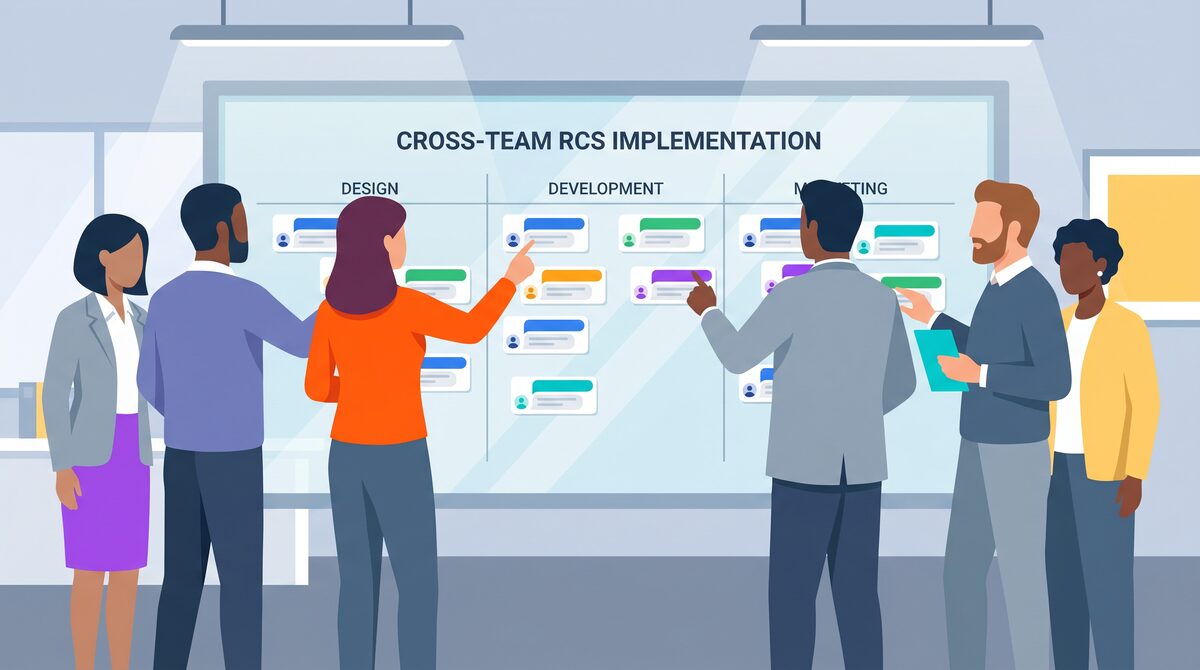
- Cross-team coordination
2. Clear Goals & Metrics
Define success from day one:
- Business impact metrics
- Technical performance targets
- Customer experience standards
- Team productivity measures
3. Strong Team
Assemble the right people:
- RCS platform expert
- Marketing strategist
- Technical integrator
- Customer service lead
4. Customer-Centric Approach
- Respect customer preferences
- Deliver value in every message
- Make interaction easy
- Gather and act on feedback
5. Continuous Improvement
- Monitor metrics religiously
- Test and optimize regularly
- Learn from failures
- Celebrate successes
Common Pitfalls to Avoid
❌ Rushing Implementation Build in time for testing and validation. Quality matters more than speed.
❌ Overwhelming Customers Start with 1-2 use cases. Expand gradually based on customer response.
❌ Poor Content Quality Invest in compelling copy, images, and design. This impacts engagement directly.
❌ Ignoring Analytics Track everything. Use data to guide decisions and optimizations.
❌ Lack of Training Ensure teams understand RCS, best practices, and your specific implementation.
Expected Timeline & Resources
Timeline: 12 weeks from discovery to full optimization
Team Size: 3-5 people
- 1 RCS/platform specialist
- 1 marketing lead
- 1 technical lead
- 1-2 content creators
- Support from existing teams
Budget: $10,000-50,000+
- Platform fees (varies)
- Carrier registration and setup
- Consulting and professional services
- Team training and development
- Content creation
- Integration and testing
Next Steps
Ready to get started? Here's what to do:
- Schedule a Discovery Call (30 mins)
- Discuss your goals and timeline
- Review your customer base
- Assess current capabilities
- Initial Planning Session (2-3 hours)
- Map your use cases
- Define success metrics
- Create preliminary timeline
- Detailed Roadmap Development
- Build your complete implementation plan
- Identify resource needs
- Lock in timeline and budget
- Execution Support
- Carrier registration and setup
- Integration and testing
- Team training and support
- Ongoing optimization
Conclusion
RCS implementation doesn't have to be complicated. With a clear roadmap, the right team, and proper planning, you can successfully launch RCS messaging and start seeing results within weeks.
Ready to get started? Schedule a consultation to discuss your implementation roadmap.
Find out if you're ready for RCS
Take our free 5-minute readiness assessment and get personalized recommendations for your business.
Tim Mushen
Experienced RCS messaging specialists sharing insights and best practices.